Common Waterproofing Mistakes That Can Damage Your Building
Waterproofing is one of the most important investments in any residential, commercial, or industrial structure. However, even premium waterproofing products cannot perform effectively if they are applied incorrectly. Small mistakes during installation often result in water leakage, structural deterioration, mold growth, and expensive repair costs. Understanding these common errors can help property owners make informed decisions and protect their buildings for years.
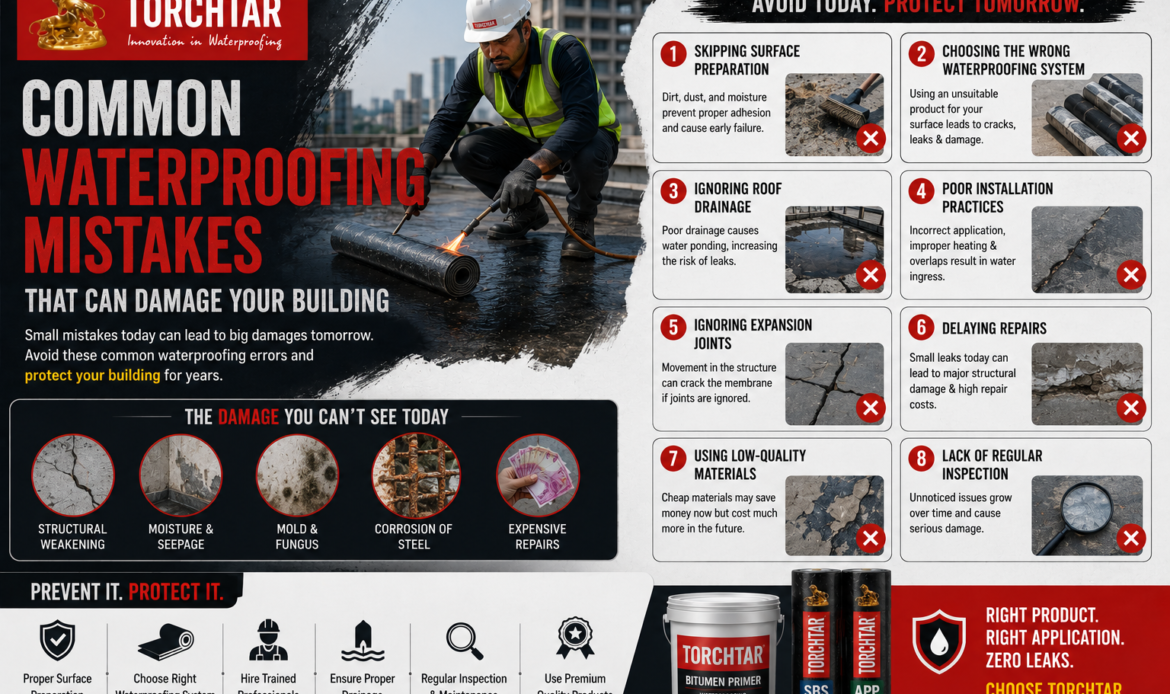
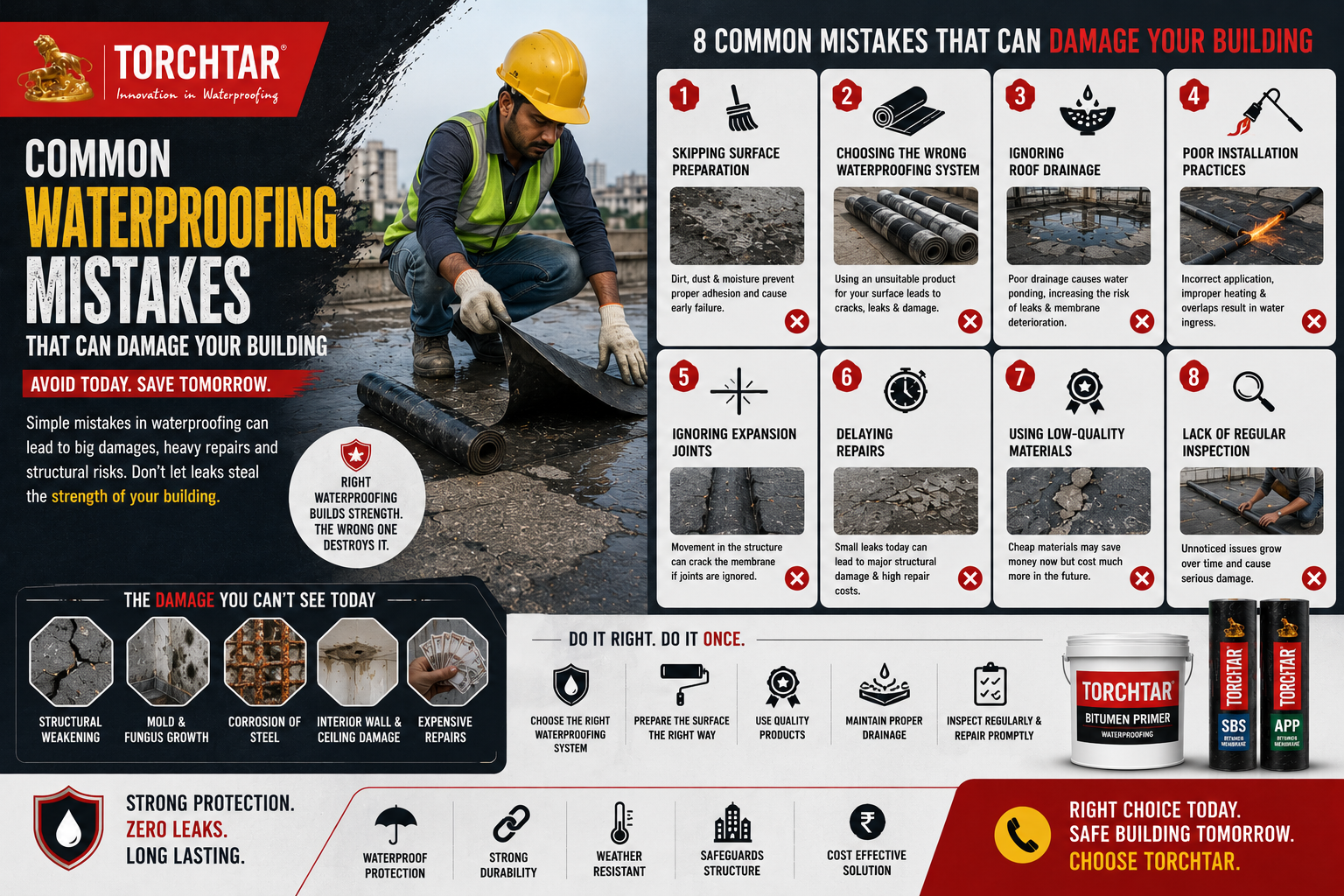
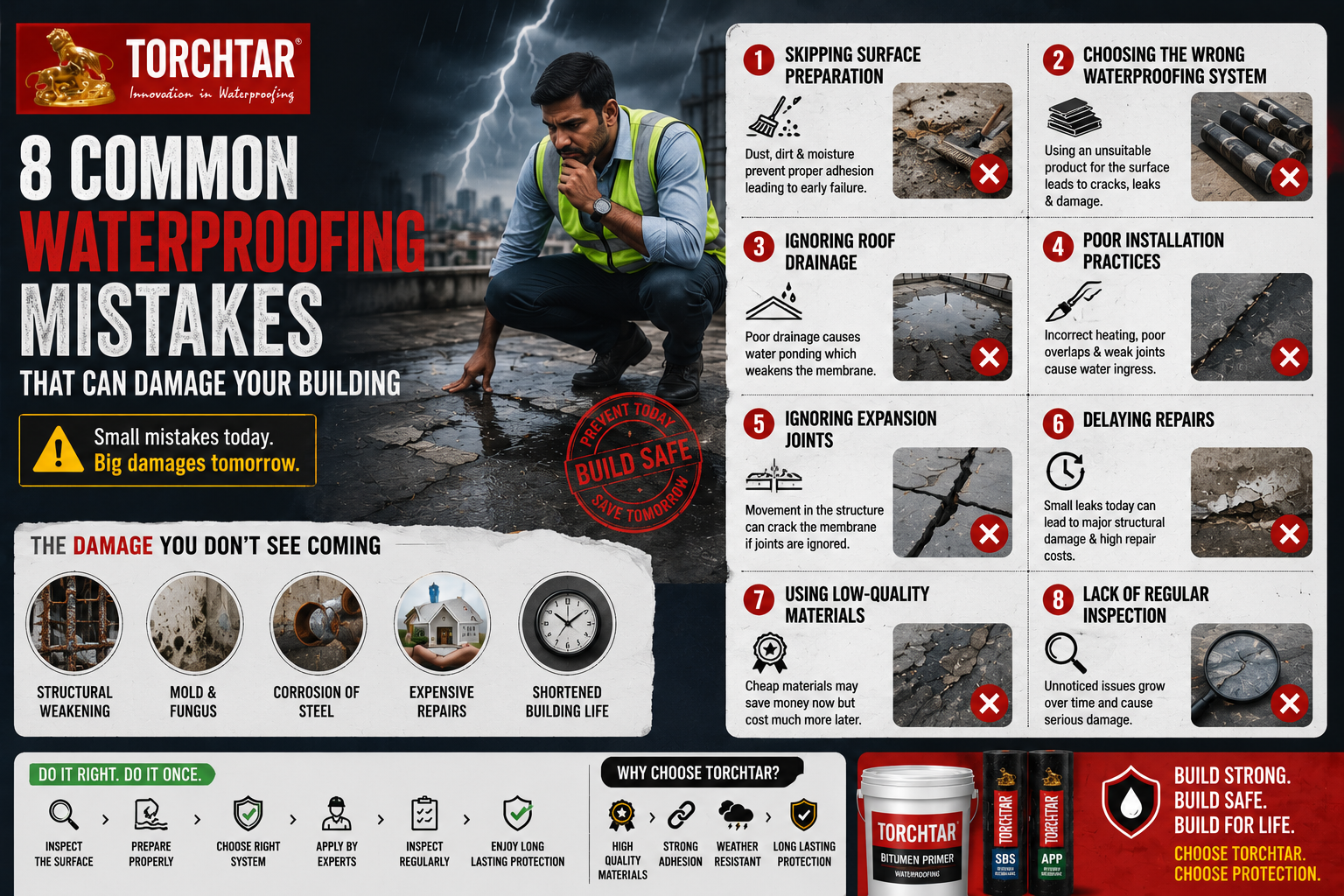
1. Skipping Surface Preparation
One of the biggest waterproofing mistakes is applying membranes or coatings over dirty, dusty, oily, or uneven surfaces. Proper cleaning and preparation ensure strong adhesion and long-lasting waterproof performance.
- Remove dust and loose particles
- Repair cracks before application
- Ensure the surface is completely dry
- Apply Bitumen Primer when required
2. Choosing the Wrong Waterproofing System
Different buildings require different waterproofing solutions. Using an unsuitable membrane or coating can lead to early failure and recurring leakage problems.
Torchtar offers a complete range of waterproofing solutions including APP Membranes, SBS Membranes, Bitumen Primer, and Liquid Waterproofing Systems suitable for various applications.
3. Ignoring Roof Drainage
Standing water is one of the leading causes of waterproofing failure. Poor drainage increases pressure on waterproof layers and accelerates membrane deterioration.
- Keep drainage outlets clean
- Remove debris regularly
- Inspect roof slopes periodically
- Prevent water ponding
4. Poor Installation Practices
Even high-quality waterproofing products can fail if installed by inexperienced workers. Incorrect overlaps, improper torching, weak joints, and air pockets reduce the lifespan of the system.
5. Ignoring Expansion Joints
Buildings naturally expand and contract due to temperature changes. Waterproofing systems must accommodate structural movement. Neglecting expansion joints often results in cracks and water ingress.
6. Delaying Repairs
Small leaks may appear harmless, but they quickly develop into major structural problems. Prompt inspection and repair significantly reduce maintenance costs and prevent further damage.
7. Using Low-Quality Materials
Cheap waterproofing products may reduce initial expenses but usually fail much sooner. Investing in premium waterproofing materials ensures better durability, weather resistance, and long-term savings.
8. Lack of Regular Inspection
Waterproofing systems should be inspected periodically, especially after heavy rainfall or extreme weather conditions. Early detection of minor issues prevents costly structural repairs.
Best Practices for Long-Term Protection
- Choose certified waterproofing products.
- Always prepare the surface properly.
- Use Bitumen Primer before membrane installation.
- Hire trained waterproofing professionals.
- Inspect roofs and foundations regularly.
- Repair cracks immediately.
- Maintain proper drainage systems.
- Follow manufacturer installation guidelines.
Why Choose Torchtar Waterproofing Solutions?
Torchtar manufactures advanced waterproofing products engineered for superior performance, strong adhesion, UV resistance, flexibility, and long-term durability. Our solutions are trusted across residential, commercial, and industrial projects where reliable protection against water damage is essential.
Conclusion
Most waterproofing failures occur because of preventable mistakes rather than poor products. Proper planning, professional installation, quality materials, and regular maintenance are the keys to a leak-free building. By choosing Torchtar waterproofing solutions and following industry best practices, you can safeguard your investment and ensure lasting structural protection.